Fossati
Restaurant

Ventilated roof
| Type: | Historical building |
| Intervention: | Renovation |
| Location: | Canonica Lambro, Triuggio (MB) |
| Roof insulation: | ISOTEC by Brianza Plastica, 60 mm thickness, 365 mm pitch |
| Roof cladding: | Pantiles |
The project
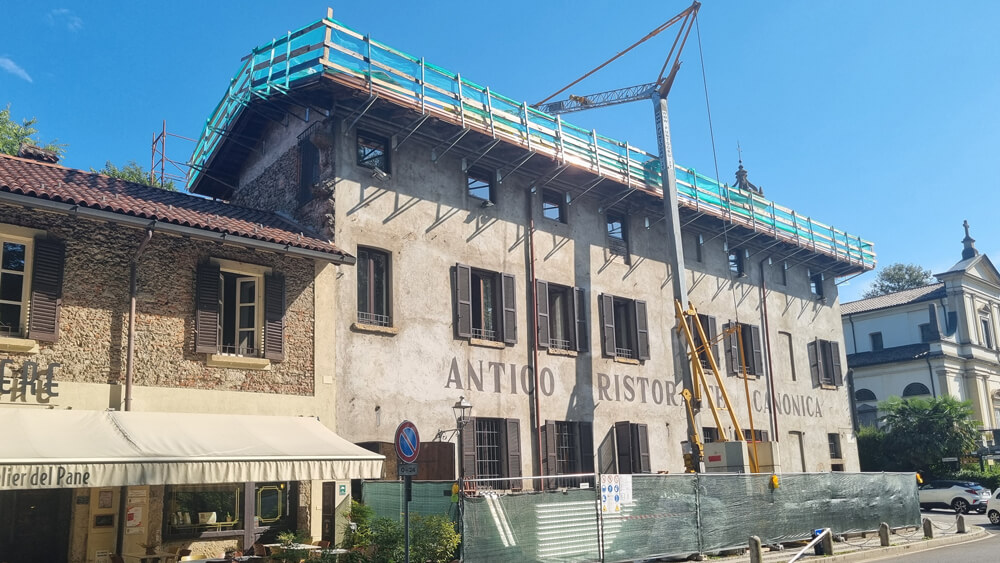
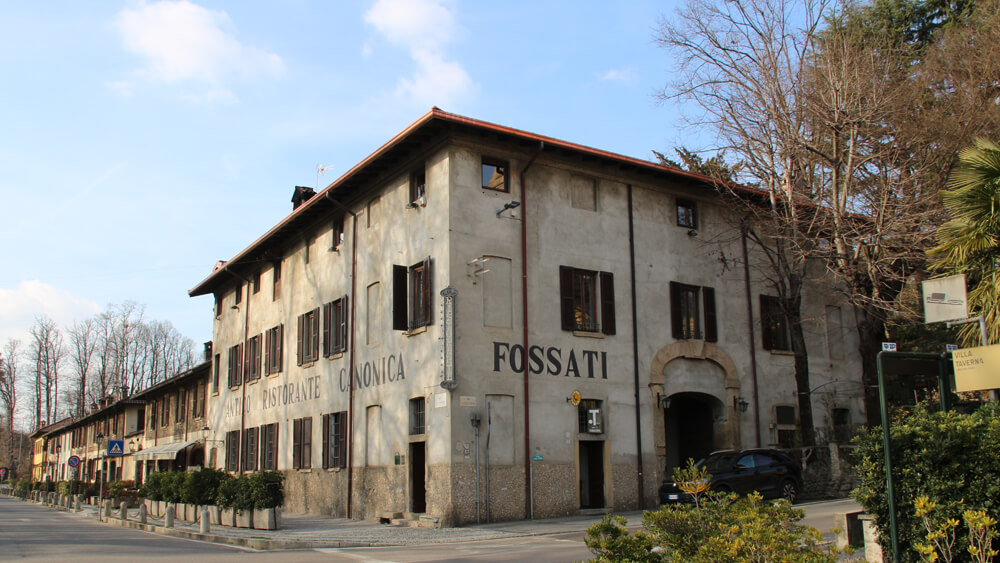
The historic Fossati Restaurant, dating back to the 15th century, is a true architectural gem. Originally built as a hunting lodge for Ludovico il Moro, over the centuries it became a coaching inn that welcomed illustrious guests, including Leonardo Da Vinci, Giuseppe Garibaldi, Vittorio Emanuele II, and Arturo Toscanini. Today, the restaurant preserves its original architectural features, including brick vaults, monumental fireplaces, and a charming internal garden, where the historic atmosphere blends harmoniously with the elegance of the spaces.
The intervention
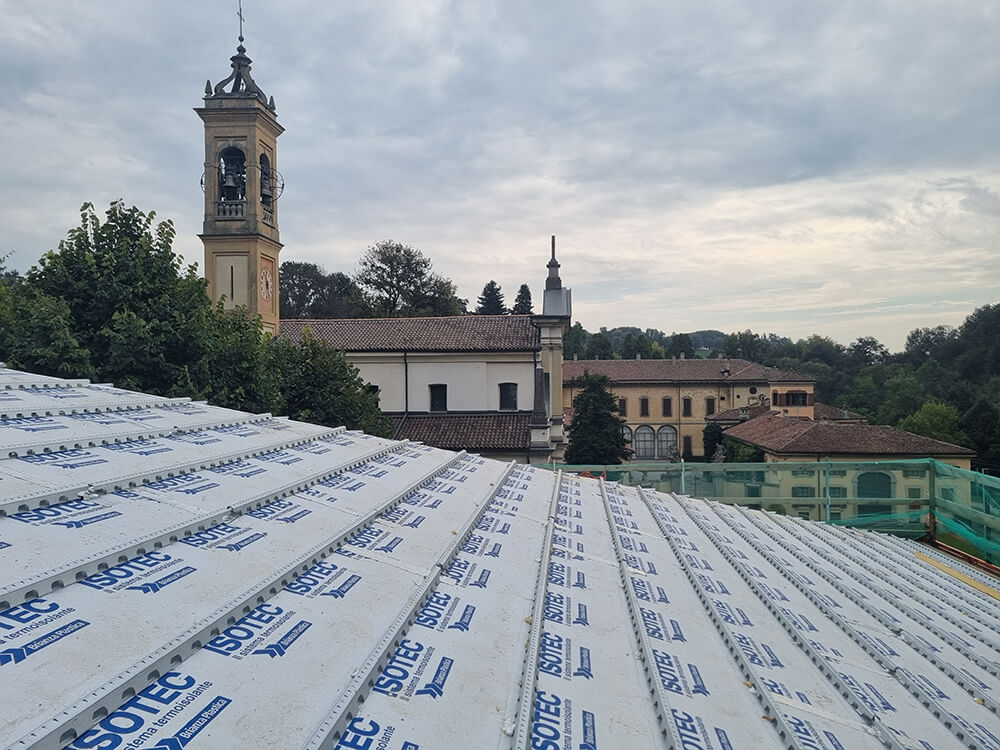
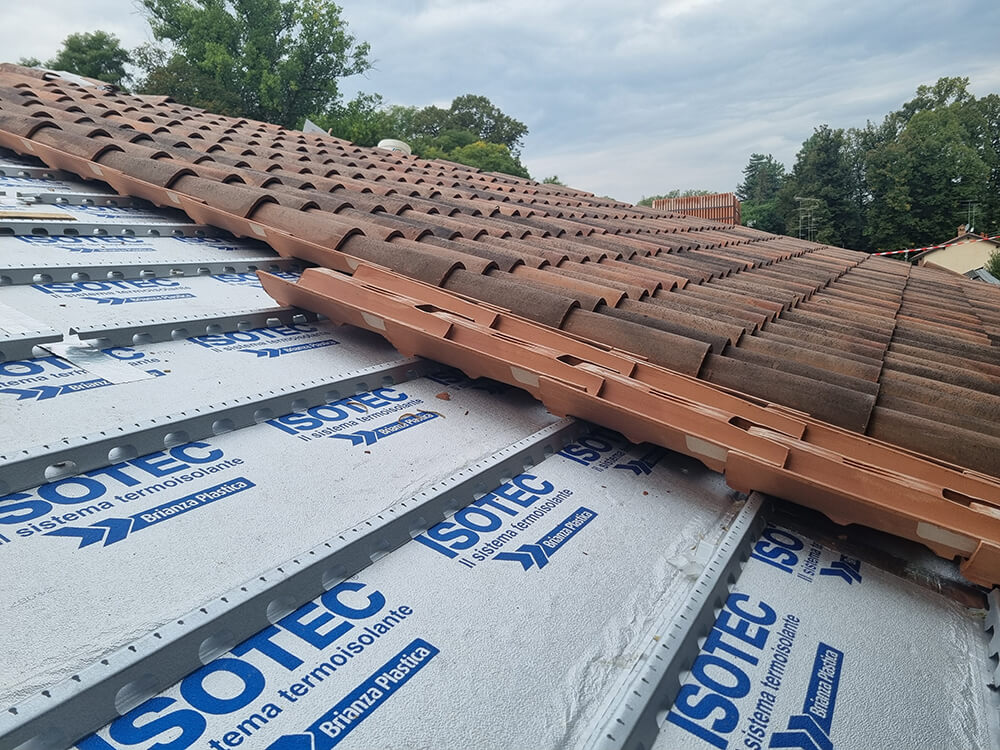
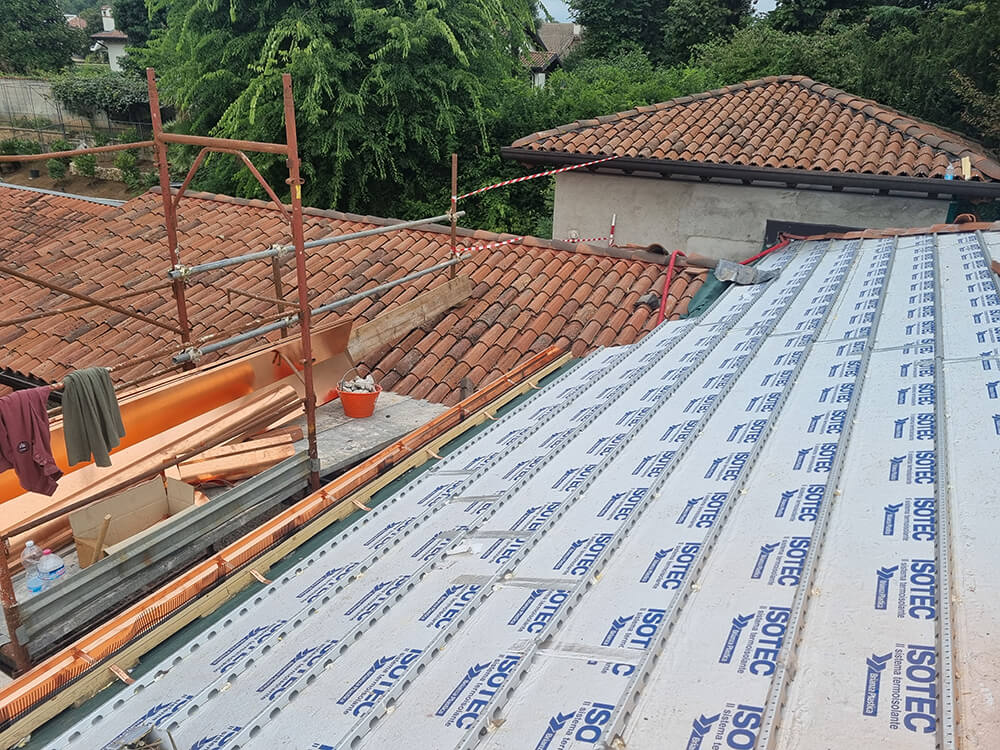
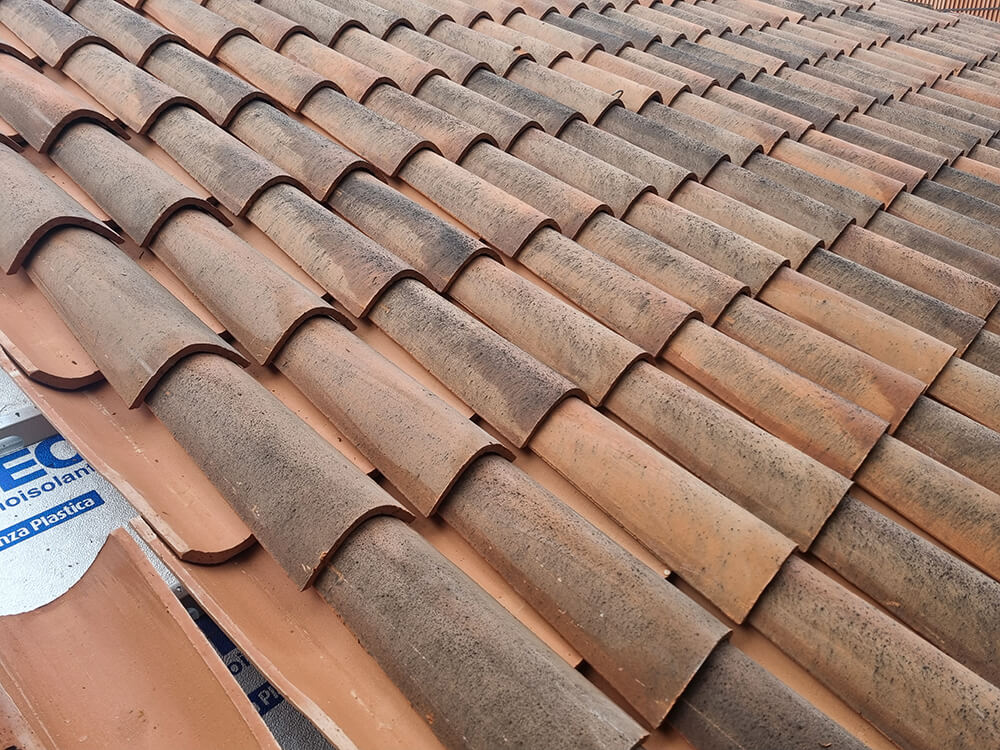
The recent renovation concentrated on restoring the roof, aiming to repair damaged sections and enhance energy efficiency while preserving the building’s historical appearance. Work began with the removal of the existing roof covering, followed by a careful inspection of the condition of the underlying wooden support. A vapour barrier membrane was then applied before installing the Isotec panels, which were laid from the eaves to the ridge in successive rows with staggered joints. The panels were carefully aligned along the edges and secured to the wooden support with suitable dowels, ensuring continuous thermal insulation and providing additional waterproofing protection. A double layer of interlocking curved tiles was then laid on the Isotec metal stiffeners, and the roofing was completed with the installation of aged tiles to preserve the building’s original architectural charm.
The result
The installation speed of the Isotec System made it possible to reduce construction times. The entire project, covering a total roof area of 500 square metres across multiple pitches, was completed by the contractor in just 30 days, minimising disruption to the restaurant’s operations. The ventilated roof insulation significantly improved the thermal comfort of the large events hall located on the top floor of the building, while also helping to preserve the integrity of the structures.